Showing posts with label Criticism. Show all posts

How to Respond to Negative Feedback

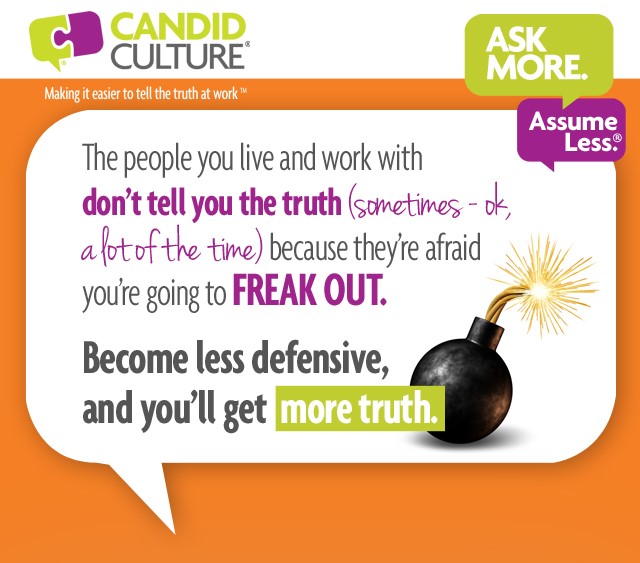
No matter what a person’s role in your life – your boss, a peer, an external customer, or even a spouse – it takes courage to give you feedback. When a conversation requires courage, the speaker's emotions are heightened. If the feedback recipient’s emotions rise in response to the feedback, conversations escalate. This is how arguments start. If you want to put the other person at ease and get more feedback in the future, do the opposite of what people are expecting. 

Rather than getting even the slightest bit defensive, do the opposite. Say, "Thank you for the feedback. I'm sorry you had that experience. I'm going to think about what you've said and may come back to you to talk more" Then walk away.

Step by Step

  1. Ask for feedback.
  2. Be specific about the type of feedback you want.
  3. Tell the person from whom you're asking for feedback when and where she can observe you in action. 
    • "I really want your feedback on the pace of the new-hire-orientation program. Will you call into the first hour next Wednesday at 9:00 a.m. and tell me what you think of the pace and why?" This request tells the person specifically what you want and demonstrates you’re serious about wanting feedback.
  4. When you receive feedback, say, "Thank you for telling me. I'm going to think about what you've said and may come back to you in a few days to talk more"
  5. Don’t respond to negative feedback immediately
    • Walk away instead of responding.
  6. If you'd like more information or want to tell the person you disagree with what they said, wait until you’re calm to have that conversation. 
    • That can be minutes or a few days later.
  7. You can express a counterpoint of view, just don’t do it immediately after receiving feedback. Anything you say at the moment will likely sound defensive.
Covered Scenarios

  • How to respond to criticism.
  • How to receive unsolicited feedback.
  • How to ask for feedback.

References

Share:

How to Manage to Unsolicited Feedback

1. Receiving Unsolicited Feedback

Unsolicited feedback at best feels like someone is trying to help, at worst it feels like criticism. If you find yourself receiving unsolicited advice, you don’t have to smile politely and take it. It’s ok to put an end to feedback and advice.

How to Respond

  • Simply smile, and tell the person:
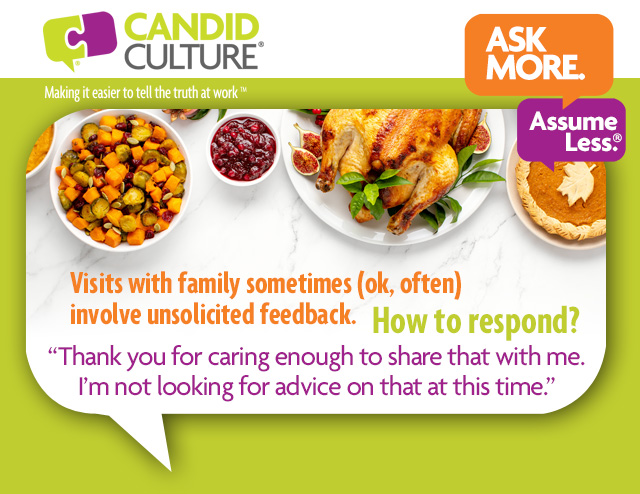
    • "I appreciate you caring enough to give me that advice, and I'm not looking for advice on that topic at this time"
  • And then smile again. 
    • Smiling softens most messages. Say nothing more. Most people will stop talking.
  • If the person continues giving you advice, simply say the same thing again.
    • "Thank you for caring enough about me to share that with me. I really appreciate your concern. And I'm not looking for advice on that at this time"
  •  If the person keeps talking, just say:
    • "I'm going to get a drink", Then get up and go get a drink.

    How to Prevent It

    Most difficult conversations are preventable. And preventing a difficult conversation is always easier than having one. If stopping unsolicited feedback feels uncomfortable, prevent it. 

    • Tell people before you see them, "I don't want to talk about _____________ (fill in the blank) Please don't bring it up over Thanksgiving"
    • You can soften that request any way you like.

    2. Giving Unsolicited Feedback

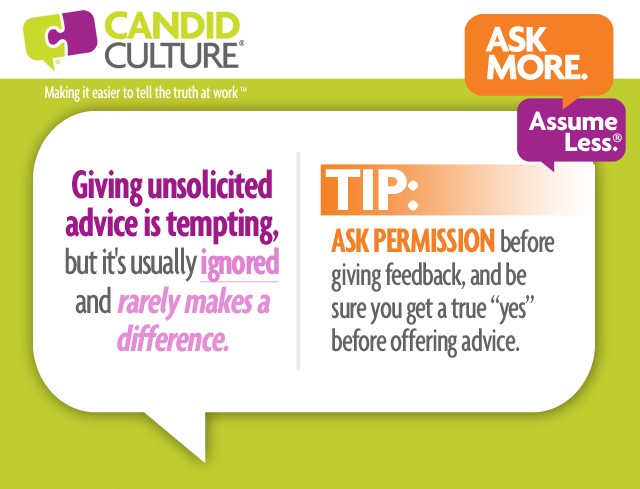
    If you really want to give unsolicited advice, ask for permission and make sure you get a true "yes" before speaking up. If you extend the invitation to talk, the other person has to be able to say no. An invitation is only an invitation if "no" is an acceptable answer. You can't ask if the person wants your input and then keep talking if he verbally or physically said no.

    How to Give Advice

    • Here are some ideas on how to introduce the advice and ask for permission before giving it:
      • "I noticed we're getting behind on the XYZ project. I have a couple of ideas about what we can do. Would you be interested in talking about them?
      • "That Monday meeting is rough. I feel for you. I used to run meetings like that. Would you be interested in talking about some meeting management strategies? I’d be happy to share what I’ve learned"
    • After you offer to talk (aka, give your opinion), listen and watch the response you get. 
      • Do the person's words and body language portray a true "yes, I’d like your opinion" or what seems like an "I know I'm supposed to say yes, but I’m really not interested" reply?
      • If you’re likely just giving unwanted advice that won't be heard. Then let it go.
    • If the person appears generally interested and open, proceed.

    Covered Scenarios

    • How to receive feedback.
    • How to receive unsolicited feedback.
    • How to respond to criticism.
    • How to give proactively feedback. 

    References

    Share: