Showing posts with label Feedback. Show all posts

How to Respond to Negative Feedback

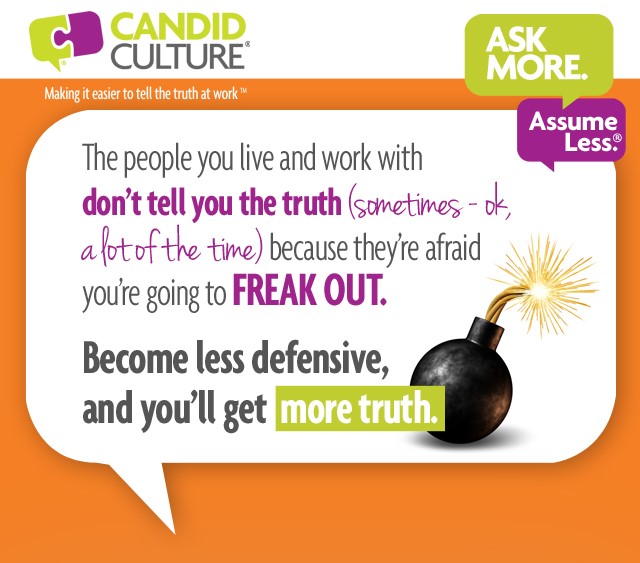
No matter what a person’s role in your life – your boss, a peer, an external customer, or even a spouse – it takes courage to give you feedback. When a conversation requires courage, the speaker's emotions are heightened. If the feedback recipient’s emotions rise in response to the feedback, conversations escalate. This is how arguments start. If you want to put the other person at ease and get more feedback in the future, do the opposite of what people are expecting. 

Rather than getting even the slightest bit defensive, do the opposite. Say, "Thank you for the feedback. I'm sorry you had that experience. I'm going to think about what you've said and may come back to you to talk more" Then walk away.

Step by Step

  1. Ask for feedback.
  2. Be specific about the type of feedback you want.
  3. Tell the person from whom you're asking for feedback when and where she can observe you in action. 
    • "I really want your feedback on the pace of the new-hire-orientation program. Will you call into the first hour next Wednesday at 9:00 a.m. and tell me what you think of the pace and why?" This request tells the person specifically what you want and demonstrates you’re serious about wanting feedback.
  4. When you receive feedback, say, "Thank you for telling me. I'm going to think about what you've said and may come back to you in a few days to talk more"
  5. Don’t respond to negative feedback immediately
    • Walk away instead of responding.
  6. If you'd like more information or want to tell the person you disagree with what they said, wait until you’re calm to have that conversation. 
    • That can be minutes or a few days later.
  7. You can express a counterpoint of view, just don’t do it immediately after receiving feedback. Anything you say at the moment will likely sound defensive.

Covered Scenarios

  • How to respond to criticism.
  • How to receive unsolicited feedback.
  • How to ask for feedback.

References

Share:

How to Manage to Unsolicited Feedback

1. Receiving Unsolicited Feedback

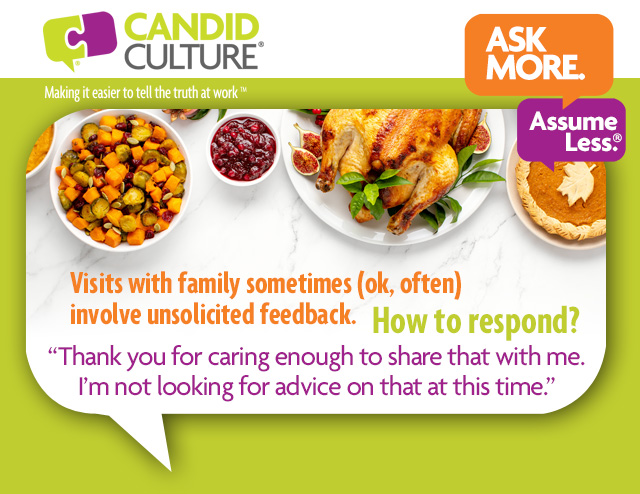
Unsolicited feedback at best feels like someone is trying to help, at worst it feels like criticism. If you find yourself receiving unsolicited advice, you don’t have to smile politely and take it. It’s ok to put an end to feedback and advice.

How to Respond

  • Simply smile, and tell the person:
    • "I appreciate you caring enough to give me that advice, and I'm not looking for advice on that topic at this time"
  • And then smile again. 
    • Smiling softens most messages. Say nothing more. Most people will stop talking.
  • If the person continues giving you advice, simply say the same thing again.
    • "Thank you for caring enough about me to share that with me. I really appreciate your concern. And I'm not looking for advice on that at this time"
  •  If the person keeps talking, just say:
    • "I'm going to get a drink", Then get up and go get a drink.

    How to Prevent It

    Most difficult conversations are preventable. And preventing a difficult conversation is always easier than having one. If stopping unsolicited feedback feels uncomfortable, prevent it. 

    • Tell people before you see them, "I don't want to talk about _____________ (fill in the blank) Please don't bring it up over Thanksgiving"
    • You can soften that request any way you like.

    2. Giving Unsolicited Feedback

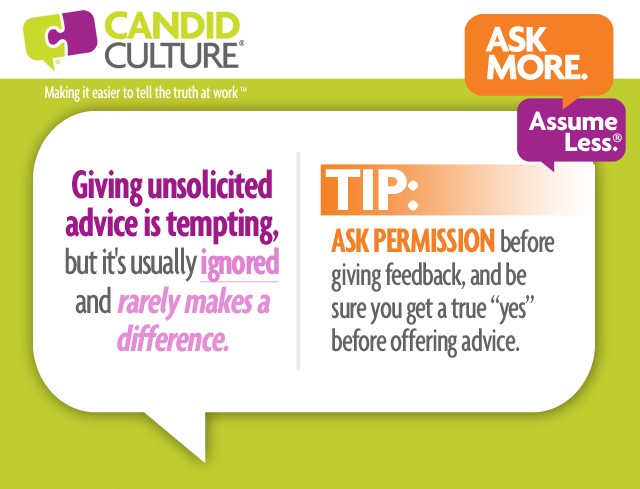
    If you really want to give unsolicited advice, ask for permission and make sure you get a true "yes" before speaking up. If you extend the invitation to talk, the other person has to be able to say no. An invitation is only an invitation if "no" is an acceptable answer. You can't ask if the person wants your input and then keep talking if he verbally or physically said no.

    How to Give Advice

    • Here are some ideas on how to introduce the advice and ask for permission before giving it:
      • "I noticed we're getting behind on the XYZ project. I have a couple of ideas about what we can do. Would you be interested in talking about them?
      • "That Monday meeting is rough. I feel for you. I used to run meetings like that. Would you be interested in talking about some meeting management strategies? I’d be happy to share what I’ve learned"
    • After you offer to talk (aka, give your opinion), listen and watch the response you get. 
      • Do the person's words and body language portray a true "yes, I’d like your opinion" or what seems like an "I know I'm supposed to say yes, but I’m really not interested" reply?
      • If you’re likely just giving unwanted advice that won't be heard. Then let it go.
    • If the person appears generally interested and open, proceed.

    Covered Scenarios

    • How to receive feedback.
    • How to receive unsolicited feedback.
    • How to respond to criticism.
    • How to give proactively feedback. 

    References

    Share:

    How to Respond an Attack

     "Mark Goulston in his breakthrough new book Talking to Crazy, brings his communication magic to the most difficult group of all - the downright irrational" - Amazon.com

    Step by Step

    1. Calmly Pause

    • Pause before responding.
      • Drink a glass of water or go to the bathroom.
    • Be mindful by using one or more of the following strategies
      • Strategy 1. Reframing an attack as an opportunity.
        • Repeat in silence the phrase: "Opportunity to poise".
        • Pause, do nothing, and repeat to yourself: "Opportunity for poise".
        • Breathe and repeat: "Opportunity for poise."
      • Strategy 2. Picturing your mentors.
        • Think of two or more people who have loved and supported you.
        • Think about the reasons why you are grateful to those people.
        • Mentally thank your mentors.
      • Strategy 3. Eight steps pause (in your mind).
        • Physical Awareness. 
          • "Right now, I am physically feeling ___."
        • Emotional Awareness. 
          • "And now I'm feeling ___.
        • Impulse awareness. 
          • "My feelings make me want to ___."
        • Consequences awareness.
          • "If I respond this way, what's is likely to happen is ___"
        • Insight awareness.
          • "Now that I'm a little calmer, I can see that I might be overreacting or taking the situation too personally in this way ___"
        • Solution awareness.
          • "A better thing to do would be ___"
        • Benefit awareness.
          • "If I try that better strategy, the benefits will be ___"
        • Let's go awareness.
          • "Now that I did the first seven steps, what I'm going to do is ___"

    2. Start the Conversation

    • Look at the eyes of the other person and say in a puzzle but not angry mode:
      • "Whoa, What was that about?".
    • If they may continue the attack. Let them go, then say:
      • "Yeah, and that too. What was that about?"
    • Let the other person go off again, then say:
      • "I can't say I like your tone or style but just so I don't miss the point you are making - what is exactly what you'd like me to get from thisor say:
      • "Not the best delivery on your part - but going forward in your mind's eye, what exactly do you want me to start doing, and what do you want me to stop doing, so we do not have this conversation again?"

    Covered Scenarios

    • How to receive feedback.
    • How to receive difficult feedback.
    • How to respond to an attack.
    • How to respond to unsolicited feedback.
    • How to calm down.
    • How to gain control.

    References

    Share:

    How to Give Feedback

    Step by Step

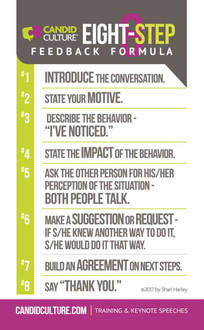
    1. Introduce the conversation by asking for a few minutes.
      • "Is it a good time for the other person to talk?."
      • "John when you have 5 minutes, I need to talk to you."
    2. State your motive.
      • Let them know you are speaking because you have their best interests at heart.
      • "This is a little awkward and may be uncomfortable. I want you to know that while I wish I didn't have to tell you this, I'm doing it because I care about you and I want you to be successful."
    3. Describe the observed behavior.
      • Picture a specific recent example of what you're referring to.
      • "John, I've noticed that you have an odor."
    4. Share the impact or result of the behavior.
      • Explain what happened as a result of the person's action.
      • "I know this is a very awkward subject (empathize). We work in a small space. I don't want others to avoid working with you or say negative things about you. And as awkward as this is, I would rather you hear this from me than someone else. Sometimes health conditions can cause certain odors, as can eating some foods."
    5. In dialogue, ask the recipient for their perception of the situation.
      • Ask questions, and have a dialogue.
      • "What are your thoughts?" or
      • "What happened?"
    6. Make a suggestion or request for what you'd like the person to do next time.
      • "I'm very sorry to tell you this. Please make sure you shower every day before coming to work and wash your clothes each time you wear them. And please tell me if there is something else you'd like me to know."
    7. Build an agreement about the next steps.
      • You can skip it based on the awkwardness of the subject.
    8. Say thank you.
      • "Thank you for being willing to have this conversation with me."

    Preparation

    • Questions for you to consider answering before a difficult feedback conversation
      • What's working? What is not working?
      • What's the most important for this person to know?
      • What would you like this person to do differently?
      • What are your requests?
      • What do you want to say but probably won't?
      • What would you say first?
    • When delivering feedback.
      • Privately (when possible). 
      • Within a week of the incident. 
      •  You or the feedback recipient are not upset. If you are upset, wait 24 hours until you are calm.
      • You have sufficient time for the conversation.
      • The recipient is not having a day during which everything has gone wrong (personal or professional speaking)
      • Neither of you goes on vacation the next day.
    • More than one piece of feedback. 
      • Address each issue individually.  
        • Once you have agreed on the next steps, then repeat the formula.
      • Give a small amount of feedback. No more than 3 things to work on at one time.
        • Address those things that still haven't changed.

    Statement Examples

    • When taking responsibility.
      • "I probably should have said something a long time ago. I'm sorry I didn't. The purpose of this conversation is to ensure you get what you need from me as your manager."
    • When the behaviors are indirectly observed by another person:
      • "Mary I appreciate you telling me this. I know you asked me not to share it, and I want to respect your confidentiality. But it's a big deal and I have to pass on the feedback. How can I share the information so that you are comfortable? Do you want to talk to X yourself, I'm sure they will be receptive or Do you want me to talk to them?"
      • "I can't identify the source of this information, and I know that's frustrating. Typically, if I can't share the source, I don't give feedback. But I think it's important for you to know this. Here is my suggestion, as difficult as this will be: rather than trying to figure out who said what, just alter your behavior. You might also tell the people with whom you work most closely that you got some feedback on ___ and you are working to improve in that area. Tell your coworkers that you would appreciate any feedback they have. Then after you've made some changes, go back to them. Share what you've done differently and ask again for specific feedback."
    • When asking for their perception:
      • If you say the wrong thing or the message comes out stronger than you would like, apologize.
      • If the person is too emotional say: 
        • "I can see this is very upsetting and I'm sorry about that. Why don't we finish this conversation another time?" - when the person is calm, resume the conversation.
        • "I'm sorry you feel that way."
    • When making the request, be direct:
      • "Here is my request, when..., Does it work for you?"
    • When thanking:
      • "Thanks for being willing to have this conversation with me. It was hard for me to talk to you about this... But our working relationship matters to me, and I want to feel ..."

    Quick Feedback 

    • "(Describe what you observed for feedback). I came across an article the other day that had some good ideas on how to..., Would you like me to make you a copy? or Would you like to hear a few ideas?"
    • "I'm realizing that when we started working together we never talked about our working-style preferences - our preferred method of communication, desired response time, how we handle questions, and so forth. I think it would be useful to have this conversation. What do you think? Would you like to do that now or schedule another time?"

      Requesting Feedback Model

      1. Ask for feedback.
        • Promise you will say "Thank You" regardless of what the person says.
        • Don't get defensive even if you think the other person is wrong.
          • The feedback is true for them
          • Deal with the other person's experience.
          • Your opinion of what happened makes no difference.
      2. Tell them
        1. "I've been working on ___"
        2. "I'd really like your feedback"
        3. "I'd specifically like feedback on ___ and ___""
        4. "Here are the opportunities in the next 2 weeks to see me do this (or review this piece of work)"
        5. "Can we schedule a meeting to discuss this?"

      Examples

      • Asking 6 people for feedback:
        • "What is the first impression I create?."
        • "What was I like to work with, or what do you think I would be like to work with?."
        • "If my coworkers were asked to talk about me when I wasn't there, what would they say?."
        • "How have I exceeded your expectations."
        • "How have I disappointed you?."
      • Asking for general feedback.
        • "We have been working together for a really long time. We see a lot of each other work and I realized that we never talk about it. I think it would be really helpful if we give each other feedback about what's working, and what we might do differently. What do you think? Is it something you'd like to do?"
      • Ask for specific feedback.
        • "I have been working very hard to strengthen my skills on X subject. Would you be willing to watch me in X's situation and give me some feedback? I'd really appreciate your insights. In fact, I'd really like more feedback in general. If you be willing to bring things to my attention that get in the way of my success, I'd really appreciate it. I promise to be receptive and say thank you. Would you be comfortable doing that?"
      • Asking for feedback from the direct supervisor.
        • "I got some feedback on ___. I respect your judgment and I would like to hear your impressions. Would you be willing to watch for this behavior over the next two weeks? Then perhaps we can set a time to discuss your observations. Would that be okay?"

      Asking others to pass the Feedback

      1. Ask the other to talk.
      2. State why you want the other person to pass the feedback.
      3. Describe the behavior. 
      4. Make a suggestion or request
      5. Volunteer to help (optionally)

      Examples

      • "Steve, I need to talk to you offline. I know you have a good relationship with X, and I'm wondering if you run little interference. I've noticed that ___, Would be willing to talk to him and how to improve on ___."

      References

      Share:

      How to Get Prepared for a Crucial Conversation

      "Crucial Conversations provides powerful skills to ensure every conversation―especially difficult ones―leads to the results you want. It teaches how to be persuasive rather than abrasive, how to get back to productive dialogue when others blow up or clam up, and it offers powerful skills for mastering high-stakes conversations, regardless of the topic or person." - Amazon.com

      Actionable Model

      Before you Speak

      1. Get Unstuck

      What problem should you address? (CPR)

      • Identify where you are stuck.
        • What bad results do you want to fix?
        • What good results are you currently unable to achieve?
        • What problems are you always trying to fix?
        • What would people complain about at home and work?
      • Unbundled with CPR.
        • Content. A single instance of a problem (the action itself of immediate consequences)
        • Pattern. Recurring problem (pattern overtime)
        • Relationship. How the problem is affecting your relationship (trust, competence, respect)

      2. Start with Heart

      • Learning to focus on what you really want.
        • What I am behaving like I want?
        • What results do I really want -
          • for myself?
          • for others?
          • for the relationship?
          • for the organization?
        • How would I behave if I really did?

      3. Master My Stories

      What do you really want for yourself, the other, your relationship, and the organization?
      • Skill 1. Separate facts from Stories.
        • Fact is something that can be proven through observation or measurement.
        • Stories are judgments, conclusions, and attributions.
      • Skill 2. Watch for Three Clever Stories.
        • Victim Stories: "It's not my fault..."
        • Villian Stories: "It's all your fault..."
        • Helpless Stories: "There is nothing else I can do..."
      • Skill 3. Tell the rest of the Story.
        • What am I pretending not to notice about my role in the problem?
        • Why would a reasonable, rational, and decent person do this?
        • What would I do right now to move towards what I really want? 

      During the Conversation

      1. STATE My Path

      • Share your facts. 
        • Start with what see and hear. Include how that differs from your expectations.
          • "I noticed that..."
          • "Twice you..."
          • "Last three times we talked about this..."
          • "I was expecting to receive this by X and it's now Y..."
      • Tell your story. 
        • How the story you are sharing differs from a clever story?. 
          • "I'm beginning to wonder if..."
          • "It seems to me..."
          • "It leads me to conclude that..."
          • "I believe that..."
          • "I start to think that..."
      • Ask for others' paths. 
        • Be humble, let others share new ideas, and challenge your story.
        • Effective:
          • "How do you see it?"
          • "Can you help me better understand?"
          • "What is your view?"
        • Ineffective:
          • "Isn't that the case?"
          • "What can we do to make sure this doesn't happen again?"
          • "No one disagrees with that, do they?"
      • Talk tentatively.
        • Tell your story as a story, not as a fact.
        • Allow room for others' stories.
        • Avoid absolutes.
        • Too Forceful vs Tentative:
          • "The fact of the matter is...." - "In my opinion..."
          • "That's a dumb idea..." - "Maybe this would make more sense..."
          • "The only reasonable option is to..." - "I believe that we should do is..."
          • "If I agree with you, then we'd both be wrong..." - "I'm wondering if that example applies to our company"
      • Encourage testing.
        • Add more meaning to the pool.
          • "What happened...?"
          • "Can you help me to understand...?"
          • "What am I missing...?"
          • "Do you see it differently?"

      2. Learn to Look

      Watch to see if the Respondent shows signs that they are feeling unsafe or signs of defensiveness because they have misinterpreted your intent. Watch for signs of Silence or Violence.
      • Learn to Look For When a Conversation Becomes Crucial
        • High Stakes.
        • High Emotions.
        • Oppositive Opinions.
      • Learn to Look For Signs of Silence of Violence in Yourself and others
        • Silence: Action taken to withhold information.
          • Avoiding.
          • Masking
          • Withdrawing
        • Violence: Action is taken to compel others towards your point of view
          • Attacking.
          • Controlling.
          • Labeling.

      3. Make it Safe

      Step out of the content. Stop talking about the issue and address the safety concerns. Rebuild safety: Mutual Purpose, Mutual Respect. Then step back in.
      • Apologize when appropriate.
      • Use contrast to address misunderstandings.
      • In the "don't" half of your statement, answer:
        • How might others mistake my purpose?
        • How might they feel disrespected?
      • In the "do" half of your statement, answer:
        • What is my real motivation?
        • How do I really feel about that person?
      • When to use contrasting:
        • In the moment. When you notice others become defensive.
        • Upfront. If you believe there is a high likelihood that the other person will misunderstand your intent.
          • "I don't think/mean/want... (their fear/misunderstanding)"
          • "I do think/mean/want... (your actual purpose or meaning)"
      • Take Four Steps to Create Mutual Purpose (Violence).
        • Commit to seeking mutual purpose. Breaking an impasse to seek the interest of others.
          • "Can we look for something we both agree on?..."
          • "It appears we're at an impasse. I'd like to see if we can come up with some shared goals..."
          • "This doesn't seem to be working. Let's see if we can come up with some common objectives..."
          • "It seems we are stuck here. Why don't we spend some time looking for something that will satisfy both of us?"
      • Recognize the purpose behind the strategy. Find the purpose by asking why they want what they want and getting both of your meanings into the pool.
        • "Let me understand where you are coming from"
        • "What are you trying to achieve?"
        • "What is it you want..."
      • Invent a Mutual Purpose. Look for a higher level, longer-term purpose.
        • "So, if we can get the project finished on time AND within the existing budget we will be both satisfied, right?"
        • "I want to spend our discretionary fund to redo our branding. You are interested in funding additional R&D. What we both want is to have the best long-term impact on our division's financial goals. I'm fine putting off regarding if it's the best long term interest of our division"
      • Brainstorm New Strategies.
        • With a clear mutual purpose, you can join forces in searching for a solution that serves everyone.

      4. Explore Others' Paths 

      Help others leave silence or violence and join you in dialogue.
      • Added AMPPs.
        • Ask them to get things rolling. 
          • Invite them to share their thoughts and feelings.
          • Show genuine interest.
          • "I want to know what you think about..."
          • "What did you hear/see to let you to that conclusion?..."
        • Mirror to confirm feelings.
          • "You are saying X, but your tone of voice and posture say Y"
        • Paraphrase to Acknowledge the story.
          • "Let's see if I've got this right. You came something around... but..."
        • Prime when you are getting nowhere.
          • "Is it something that I've done that has you upset"
          • "It's ok to share what you are really thinking and feeling. I won't be offended..."

      After

      1. Move to Action

      • Who does what by when and follow up

      Resources
      Share: