How to Express Gratitude

Based on Positive Moralistic Judgments, people often say: "You did a good job on that paper", "You are a very kind person", and "You are a good dancer" and that's Jackal Language. It's intended to reward, people's behavior with the purpose to reinforce something to the person to continue doing. It works only until people see the manipulation and it's equally dangerous that people won't trust gratitude anymore.

How to Give Gratitude

Using the NVC Model, you can say something like:
  • "When you did/said X, Y..., it leaves me feeling Z (e.g. hopeful and relieved). It meets a need of mine for A..."

How to Receive Gratitude

According to Dr. Rosemberg, there is zero information value in being told what you are and there is a great danger to you in believing it. It's better to help the other person to fully express themself:
  • [O] "Thank you/You are a good/intelligent/..."
  • [Y] "What did I do or say to make life more wonderful for you?"
  • [O] "You said/did..."
  • [Y] "Can you tell me how you feel now as a result of me having done/saying those X things?"
  • [O]: E.g., "Hopefull and relieved"
  • [Y]: "What need of you was fulfilled by me saying what I did that leaves you feeling 'hopeful and relieved'"
  • [O]: "...my need for connection"

The Conference


Scenarios Covered

  • How to say thank you.
  • How to express appreciation.
  • How to give feedback.
  • How to receive feedback.

References

  • Nonviolent Communication (post)
  • Feelings and Needs (post)
Share:

Faux Feelings

When somebody says: "I’m feeling rejected", in nonviolent communication you might empathically translate this as: "Are you feeling scared because you would really like to be included?". These words imply that someone is doing something to you and generally connote wrongness or blame - Narrative Pathways.com

Jackal Word to Giraffe Feeling(s), and Need(s)

  • Abandoned: Terrified, hurt, bewildered, sad, frightened, lonely.
    • Need for: Nurturing, connection, belonging, support, caring.
  • Abused: Angry, frustrated, frightened.
    • Need for: Caring, nurturing, support, emotional or physical well-being, consideration, need for all living things to flourish
  • [NotAccepted: Scared, lonely, hurt, anxious.
    • Need for: Inclusion, connection, community, belonging, contribution, peer respect.
  • Attacked: Scared, angry, defiant, hostile.
    • Need for: Safety, consideration.
  • Belittled: Angry, frustrated, tense, distressed.
    • Need for: Respect, autonomy, to be seen, acknowledgment, appreciation.
  • Betrayed: Angry, hurt, disappointed, enraged.
    • Need for: Trust, dependability, honesty, honor, commitment, clarity.
  • Blamed: Angry, scared, confused, antagonistic, hostile, bewildered, hurt.
    • Need for: Accountability, causality, fairness, and justice.
  • Bullied: Angry, scared, pressured Autonomy, choice, safety, consideration.
  • Caged/Boxed-in: Angry, thwarted, scared, anxious.
    • Need for: Autonomy, choice, freedom.
  • Cheated: Resentful, hurt, angry.
    • Need for: Honesty, fairness, justice, trust, reliability.
  • Coerced: Angry, frustrated, frightened, thwarted, scared.
    • Need for: Choice, autonomy, freedom, act freely, choose freely.
  • Cornered: Angry, scared, anxious, thwarted.
    • Need for: Autonomy, freedom.
  • Criticized: In pain, scared, anxious, frustrated, humiliated, angry, embarrassed.
    • Need for: Understanding, acknowledgment, recognition, accountability, and respectful communication.
  • Discounted/Diminished: Hurt, angry, embarrassed, frustrated.
    • Need to matter, acknowledgment, inclusion, friendship, inclusion.
  • Disliked*. Sad, lonely, hurt.
    • Need for: Connection, appreciation, understanding, acknowledgment, friendship, inclusion
  • Distrust. Sad, frustrated.
    • Need for: Trust, honesty.
  • Dumped on. Angry, overwhelmed.
    • Need for: Respect, consideration.
  • Harassed. Angry, frustrated, pressured, frightened.
    • Need for: Respect, space, consideration, peace.
  • Hassled. Irritated, distressed, angry, frustrated.
    • Need for: Serenity, autonomy, to do things at my own pace in my own calm way, calm, space.
  • Ignored. Lonely, scared, hurt, sad, embarrassed.
    • Need for: Connection, belonging, inclusion, community, participation.
  • Insulted. Angry, embarrassed.
    • Respect, consideration, acknowledgment.
  • Interrupted. Angry, frustrated, resentful, hurt.
    • Need for: Respect, to be heard, consideration.
  • Intimidated. Scared, anxious.
    • Need for: Safety, equality, empowerment.
  • Invalidated. Angry, hurt, resentful.
    • Need for: Appreciation, respect, acknowledgment, recognition.
  • Invisible. Sad, angry, lonely, scared.
    • Need for: To be seen and heard, included, belong, community.
  • Isolated. Lonely, afraid, scared.
    • Community, inclusion, belonging, contribution.
  • Left out. Sad, lonely, anxious.
    • Need for: Inclusion, belonging, community, connection.
  • Let down. Sad, disappointed, frightened.
    • Need for: Consistency, trust, dependability.
  • Manipulated. Angry, scared, powerless, thwarted, frustrated.
    • Need for: Autonomy, empowerment, trust, equality, freedom, free choice, connection, genuineness.
  • Mistrusted. Sad, angry.
    • Need for: Trust.
  • Misunderstood. Upset, angry, frustrated.
    • To be heard, understood, clarity.
  • Neglected: Lonely, scared.
    • Need for: Connection, inclusion, participation, community, to be cared for, matter, consideration.
  • Overpowered. Angry, impotent, helpless, confused.
    • Need for: Equality, justice, autonomy, freedom.
  • Overworked. Angry, tired, frustrated.
    • Need for: Respect, consideration, rest, caring.
  • Patronized. Angry, frustrated, resentful.
    • Need for: Recognition, equality, respect, mutuality.
  • Pressured: Anxious, resentful, overwhelmed.
    • Need for: Relaxation, clarity, space, consideration.
  • Provoked. Angry, frustrated hostile, antagonistic, resentful.
    • Need for: Respect, consideration.
  • Put down. Angry, sad, embarrassed.
    • Need for: Respect, acknowledgment, and understanding.
  • Rejected. Hurt, scared, angry, and defiant.
    • Belonging, inclusion, closeness, being seen, acknowledgment, and connection.
  • Ripped off/Screwed. Anger, resentment, disappointment.
    • Need for: Consideration, justice, acknowledgment, trust.
  • Smothered/suffocated: Frustrated, desperate, fearful.
    • Need for: Space, freedom, autonomy, authenticity, self-expression.
  • Taken for granted. Sad, angry, hurt, disappointed.
    • Need for: Appreciation, acknowledgment, recognition, consideration.
  • Threatened. Scared, frightened, alarmed, agitated, defiant.
    • Need for: Safety, autonomy.
  • Trampled. Angry, frustrated, overwhelmed.
    • Need for: Empowerment, connection, community, being seen, consideration, equality, respect, acknowledgment.
  • Tricked. Embarrassed, angry, resentful.
    • Need for: Integrity, trust, honesty.
  • Unappreciated. Sad, angry, hurt, frustrated.
    • Need for: Appreciation, respect, acknowledgment, consideration.
  • Unheard. Sad, hostile, frustrated.
    • Need for: Love, appreciation, empathy, connection, community.
  • Unloved*. Sad, bewildered, frustrated.
    • Need for: Love, appreciation, empathy, connection, community.
  • Unseen. Sad, anxious, frustrated.
    • Need for: Acknowledgment, appreciation, being heard.
  • Unsupported. Sad, hurt, resentful.
    • Need for: Support, understanding.
  • Unwanted. Sad, anxious, frustrated.
    • Need for: Belonging, inclusion, caring.
  • Used. Sad, angry, resentful.
    • Need for: Autonomy, equality, consideration, and mutuality.
  • Victimized. Frightened, helpless.
    • Need for: Empowerment, mutuality, safety, justice.
  • Violated*. Sad, agitated, anxious.
    • Need for: Privacy, safety, trust, space, respect.
  • Wronged*. Angry, hurt, resentful, irritated.
    • Need for: Respect, justice, trust, safety, fairness.

References

Share:

Feelings and Needs

 1. Feelings Associated With Met Needs

  • AFFECTIONATE. Compassionate, fond, loving, openhearted, tender, warm.
  • ENGAGED. Absorbed, curious, engrossed, enchanted, enthralled, entranced, fascinated, interested, intrigued, involved, open, spellbound, stimulated.
  • EXCITED. Amazed, ardent, aroused, dazzled, energetic, enlivened, enthusiastic, exuberant, invigorated, lively, passionate, surprised, vibrant.
  • EXHILARATED. Enthralled, radiant, electrified, euphoric, overjoyed, thrilled.
  • GRATEFUL. Appreciative, moved, thankful, and touched. 
  • HAPPY. Amused, blissful, cheerful, delighted, ecstatic, elated, giddy, glad, jolly, joyful, jubilant, merry, overjoyed, pleased, rapturous, tickled.
  • HOPEFUL. Confident, expectant, jazzed, lighthearted, sanguine, up, upbeat.
  • INSPIRED. Amazed, eager, enthused, motivated, moved, psyched, stimulated, stirred, wonder
  • PEACEFUL. Calm, comfortable, centered, content, equanimity, fulfilled, mellow, open, quiet, relaxed, relieved, satisfied, serene, tranquil.
  • REFRESHED. Recharged, rejuvenated, renewed, rested, restored, revived.

2. Feelings Associated With Unmet Needs

  • ANGER. Aggravated, angry, animosity, annoyed, contempt, disgruntled, enraged, exasperated, furious, hate, hostile, incensed, irate, irritated, irked, livid, miffed, nettled, outraged, peeved, resentful.
  • AVERSION. Abhorrence, appalled, bothered, displeased, disgusted. dislike. enmity. horrified. loathing. repulsion, revulsion.
  • CONFUSION. Ambivalent, baffled, bewildered, conflicted, dazed, discombobulated, disoriented, mixed, mystified, perplexed, puzzled, torn.
  • DISCONNECTION. Apathetic, bored, closed, detached, distant, indifferent, listless, numb, withdrawn.
  • DISQUIET. Agitated, alarmed, concerned, distraught, disconcerted, dismayed, disturbed, frustrated, perturbed. rattled, restless, shocked, startled, surprised, troubled, turbulent, turmoil, uncomfortable, uneasy, unnerved, unsettled, upset.
  • EMBARRASSMENT. Ashamed, chagrined, discomfited, flustered, mortified, self-conscious.
  • FATIGUE. Beat, burnt out, depleted, exhausted, listless, pooped, sleepy, tired, weary, wiped out, worn out. 
  • FEAR. Afraid, anxious, apprehensive, dread, fearful, foreboding, frightened, guarded, insecure, leery, mistrustful, panicked, petrified, scared, shaky, terrified, trepidation, wary, worried.
  • PAIN. Aching, agony, anguished, devastated, grief, heartbroken, hungry, hurting, lonely, miserable, regretful, remorseful.
  • SADNESS. Depressed, dejected, despairing, despondent, disappointed, discouraged, disheartened, forlorn, gloomy, heavy-hearted, hopeless, melancholy, miserable, unhappy, wistful.
  • TENSION. Anxious, closed, distressed, edgy, fidgety, frazzled, frustrated, jittery, nervous, overwhelmed, restless, stressed out.
  • YEARNING. Longing, nostalgic, pining.

3. Needs and Values

  • AUTONOMY. Choice, dignity, freedom, independence, self-expression, space, and spontaneity.
  • CONNECTION. Acceptance, affection, appreciation, authenticity, belonging, care, closeness, communication, communion, community, companionship, compassion, consideration, empathy, friendship, inclusion, inspiration, integrity, intimacy, love, mutuality, nurturing, partnership, presence, respect/self-respect, security, self-acceptance, self-care, self-connection, self-expression, shared reality, stability, support, to know and be known, to see and be seen, trust, understanding, warmth.
  • MEANING. Awareness, celebration, challenge, clarity, competence, consciousness, contribution, creativity, discovery, efficiency, effectiveness, growth, integration, integrity, learning, mourning, movement, participation, perspective, presence, progress, purpose, self-expression, stimulation, and understanding.
  • PEACE. Acceptance, balance, beauty, communion, ease, equanimity, faith, harmony, hope, order, peace of mind, and space.
  • PHYSICAL WELL-BEING. Air, care, comfort, food, movement/exercise, rest/sleep, safety (physical), self-care, sexual expression, shelter, touch, water.
  • PLAY. Adventure, excitement, fun, humor, joy, relaxation, stimulation.

References

Share:

How to Express Appreciation

 "At work, people express and receive appreciation in different ways. If you try to express appreciation in ways that aren’t meaningful to your co-workers, they may not feel valued at all. This is because you and your co-workers are speaking different languages. In The 5 Languages of Appreciation in the Workplace, you will identify the five languages of appreciation in order to express genuine appreciation to co-workers and staff" - Amazon.com.

Five Appreciation Languages at Work

  1. Words of Affirmation. Using words to communicate a positive message to another person.
    • One on One.
    • In front of others (if they feel comfortable).
    • Written email.
  2. Quality Time: Giving the person your focused attention.
    • Eye contact, no distractions.
    • Listen to feelings and thoughts.
  3. Acts of Service: Providing assistance.
    • Ask before you help.
    • Check your attitude.
    • Do it their way.
    • Complete what you start 
      • Or let to know in advance how much time you have and let them decide.
  4. Tangible Gifts: Giving physical items.
    • Give gifts to those who appreciate them.
    • Gifts must be something the person values.
    • Can be time off 
    • The most common is food 
  5. Physical Touch: Person-to-person contact.
    • Handshakes.
    • High fives.
    • Fist bumps.
    • Brief hugs (especially in emotional times).

Ideas for Application

Language 1. Words of Affirmation

  • Acknowledge my effort on a project I am in / but not in the presence of my teammates.
  • When appropriate, I'd like to be recognized in front of others for work well done.
  • Praise me in private, not in front of anyone else.
  • Occasionally tell me “thanks” – in person – for my contribution.
  • Send me an email to let me know what I am doing well.
  • Recognize when I have handled a difficult situation.
  • Tell others (when I am not around) about the good job I am doing.
  • Give me a specific compliment about some aspect of my character or personality.
  • In my review, make a list of positives regarding how I am doing.
  • Give our team a group compliment when we have done well.
  • Let my colleagues know when I have achieved significant goals or completed important tasks.
  • A handwritten note of appreciation is particularly meaningful to me.
  • Other ___.

Language 2. Quality Time

  • Go to coffee or lunch together to talk about work issues.
  • Go to coffee or lunch together and not talk about work issues.
  • Go to lunch together as a team of colleagues.
  • Stop by in person to check in with me regarding how things are going.
  • Call me occasionally to "check in" to see how I am doing.
  • Get together for occasional after-hours team events.
  • Take a walk together if feasible, rather than meet in the office.
  • Take part in an out-of-the-office event/retreat for our team.
  • Have a regular (e.g., weekly) “check-in” meeting to catch up.
  • Other ___.

Language 3. Acts of Service

  • Stay after hours to help me complete a project.
  • Ask me what you could do to help me (and then follow through).
  • Offer to do some routine tasks that will allow me to focus on higher priorities.
  • Offer to do some task for me that I dislike doing.
  • Stop by and work with me on a project I need to complete.
  • Help me clean up / organize my office or desk.
  • Review/edit a written document for me.
  • Offer to be a backup for me when I’m on leave or out sick.
  • Help me understand how to get the most out of my technology tools.
  • Come in early to help me get something done.
  • Other ___.

Language 4. Tangible Gifts

  • Take me to lunch as a gesture of appreciation.
  • Give a small gift card to my favorite place, which is ___.
  • Bring my favorite coffee / hot beverage/snack / ___.
  • Find a book or magazine related to my interests or area of expertise, such as ___.
  • Bring in cake, cookies, or snacks to celebrate!
  • Bring something from an interesting place you’ve been to.
  • Give, as a token of appreciation:
    • An Agency Challenge Coin
    • A Time-Off award
    • Agency lanyards, pens, or coffee mugs
    • Commemorative pins/patches/posters
  • Other ___.

Language 5. Physical Touch

  • Handshakes.
  • High fives.
  • Fist bumps.
  • Brief hugs (especially in emotional times).
  • Be careful to avoid misunderstandings.

Resources

Share:

How to Apologize

"I said I was sorry! What more do you want? Even in the best of relationships, we mess up. We say and do things we deeply regret later on. So we need to make things right. But just saying you’re sorry isn’t enough. That’s only the first step on the road to restoration. In The 5 Apology Languages, Gary Chapman partners with Jennifer Thomas to help you on the journey toward restored relationships" - Amazon.com

True healing comes when you learn to: 

  • Express regret: "I'm sorry"
  • Accept responsibility: "I was wrong"
  • Make restitution: "How can I make it right"
  • Plan for change: "I'll take steps to prevent a reoccurrence"
  • Request forgiveness: "Can you find it in your heart to . . . ?"

The Conference

1. Expressing Regret

  • "I know now that I hurt you very deeply. That caused me deep pain. I am very sorry for what I did"
  • "You were promised a service that we have not provided. I am sorry our Company clearly dropped the ball this time"
  • "I obviously was not thinking very well. I never meant to hurt you, but I can see my words were way out of line. I'm sorry that I was not so insensitive"
  • "I feel really bad, I disappointed you. I should have been more thoughtful. I'm sorry I caused so much pain"

2. Accepting Responsibility

  • "I made a big mistake. I wasn't thinking at that time. But looking back, that was a problem. I wish I had thought before I acted. I was wrong"
  • "I spoke out of anger, trying to justify myself, but it was unkind and untrue. I was wrong"
  • "I repeated a mistake that we've discussed before. I messed up. I know it was my fault"

3. Restitution

  • "Is there anything that I can do to make up for what I have done?"
  • "Just saying "I'm sorry" doesn't seem right. I want to make it up somehow; what would you consider appropriate?"
  • "I've broken this promise again; would it help if O put my commitment in writing?"
  • "I damage your honor. Can I make a public correction in some way?"

4. Genuine Repentance

  • "How could I say that in a different way than you would not come across as critical?"
  • "I know my behavior was painful to you, and I do not want to cause pain. I am open to any ideas you may have for me"
  • "I let you down again. What would it take for you to rebuild your trust in me?"

5. Requesting forgiveness

  • "I know what I did hurt you very deeply. You have every right never to speak to me again, but I am truly sorry for what I did. I hope you can find it in your heart to forgive me"
  • "I am sorry for the way I spoke. You didn't deserve that. It was wrong of me. I am asking you to forgive me"

Resources

Share:

How to Self Coaching


Actionable Model

  • Step 1. Feel you're nowName your emotion (one word) and describe it.
    • "What are you feeling right now?", 
      • "I feel ___, and this is the way how I feel it in my body is: ___."
      • If happy/say, bad/good is also okay.
    • Outer awareness - Feeling the feeling.
  • Step 2. Find the sentence causing it.
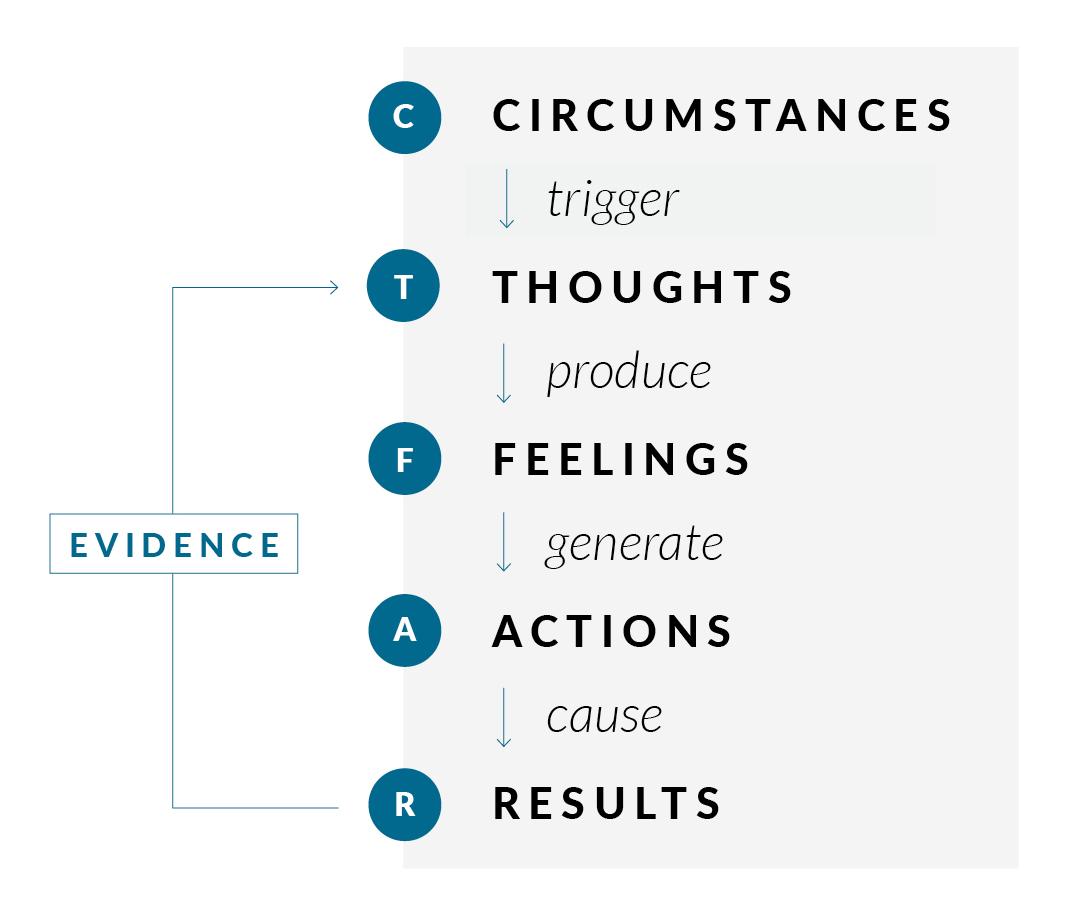
    • All feelings are caused by your thoughts. Nothing outside causes your emotions.
    • Sensations.
      • Things that happen in your body involuntarily travel to your mind.
      • Stuff outside of your case sensations. Sun makes you hot or outside makes you cold.
    • Emotions. 
      • Require consciousness that starts in your mind and travels to your body.
      • It's always caused by a sentence in your mind.
    • Not a circumstance, facts vs thoughts:
      • "I feel anxious because I lost my job" (circumstance)
        • What is your thought about "not having my job?
          • "I'm not gonna be able to pay my bills...", (thought) or
          • "I'll never be able to work again..." (thought).
    • What is my brain thinking? What sentences are being fed to me from my brain?
    • It's important to know because it's causing how you feel and if you don't know you can't change it and you are going to feel powerless, depressed, and fearful, and you do not why.
    • Every sentence in your mind is a choice.
    • You can deliberately decide what to think otherwise the brain will do it for you unsupervised.
  • Step 3. Create a new, true thought.
    • Give it equal airtime.
    • It will produce a new feeling.
    • Example"
      • "I feel inadequate" (feeling)
        • "I am not enough" (thought)
          • "because I won't be able to get all this done"
      • Then think, also consider: 
        • "I am enough " (new though)
          • "because I'm gonna get everything done I can "
        • It makes you feel worthy. 
    • You do not have to get rid of the negative if you do not want
    • You can introduce the new thought and allow yourself to feel both as well. 
    • What makes it true is that you believe it.
      • You will have to probe the new thought in certain ways and you see how that's true then you can hold that thought with the other thought.
    • Negative:
      • "I'm not going to be able to get it all done today" to
    • Positive
      • "I'm going to get half of my list today"...
      • "I'm going to get 7 things done today"...
      • ...
      • You will get some sense of accomplishment together with a sense of inadequacy.

Videos

References

  • TBD
Share:

Coaching with Clean Language

"The Five-Minute Coach offers a simple, step-by-step guide to how to coach quickly and effortlessly and get amazingly better results at work. Short, punchy, and easy to read, the user can swiftly learn this innovative and effective tool for improving performance. Designed for leaders, managers, and supervisors, in any setting, The Five-Minute Coach is a ground-breaking approach to coaching on the job" - Amazon.com

Step 1. Identify and Outcome.

  • "[And] What would you like to have happened?
    • If the answer is not an Outcome, ask:
      • "And [last answer] What would you like to have happened?"
    • If the answer is an Outcome then continue

Step 2. Choosing the best Outcome.

  • "And when [outcome in coaches words], then what happens?"
  • "And when [last answer], then what happens?"
    • Repeat the question with each answer until no new answer emerges.
  • "And [outcome] and [recap all the answers], what are you drawn to most?"
    • This is the 'new outcome'.

Step 3. Discovering more about the Outcome.

  • "And when ['new outcome'], what kind of [same word or phrase from the outcome]?"
  • "And when [last answer], is there anything else about [same word or phrase]?"
  • "And when [last answer], where is/are [same word or phrase]?"
  • "And when [last answer], whereabouts [last answer]?"
  • "And [last answer]. Given what you know, what would like to have happened?"
    • This is the 'final outcome'.

Step 4. Action Planning.

  • "And what needs to happen for ['final outcome']?"
  • "And is there anything else that needs to happen for [final outcome]?"
    • Repeat the question until you hear 'no' as an answer.
  • "And [final outcome and recap every action point]is there anything else that needs to happen for [final outcome]?"
    • Repeat the question until you hear 'no' as an answer.
  • "And [final outcome and recap every action point], and what needs to happen first? And can [previous answer]"

Step 5. Motivate to Act.

  • "And when [first thing], then what happens?"
    • Repeat until the coachee is in a positive state and seems keen to act.
  • "And is that a good place to stop?"
    • Handover notes.

References

Share:

Coaching with only 7 Questions

1. What's on Your Mind?

Use the 3P Model to focus the conversation:

  • Project. Content of the situation. Start here and see if the conversation can be moved to any of the other two Ps.
  • People. What your role is in this relationship that might currently be less than ideal.
  • Patterns. Patterns of behaviors and ways of working that you'd like to change.
  • Example:
    • After asking: "Out of curiosity, What's in your mind?"
    • Deepen the conversation: "So there are three different facets of what we could look at. Project side - any challenges about the actual content. The People side - any issue with team members/colleagues/other departments/bosses/customers/clients and Patterns - if there's a way that you're getting in your own way, and not showing up in the best possible way. Where should we start?"

2. And What Else?

  • Ask it one more time.
  • Recognize success when people say: "There is nothing else"
  • Wrapping up: 
    • "Is there anything else?"
    • "What else could you do?"
    • "What else might be possible?"

3. What's the Real Challenge here for You? 

  • The solution to the Proliferation of Challenges - too many topics at once: 
    • "If you have to pick one of there to focus on, which one here would be the real challenge for you?"
  • The solution to coaching the ghost - talking about other people, projects, or situations rather than focusing on what they can do:
    • "I think that I understand what's going on with [insert the name of other people/project/situation]. What's the real challenge here for you?"
  • The solution to abstractions & generalizations - big picture, high-level conversations/talking about "us" and "we" but not about "me" and "I":
    • "I have a sense of the overall challenge. What is the real challenge here for you?"

4. What do you want?

  • Listen if you see the need behind the person's response.
  • Universal needs:
    • Affection.
    • Creation.
    • Recreation.
    • Freedom.
    • Identity.
    • Understanding.
    • Participation.
    • Protection.
    • Subsistence.
  • Drive engagement, Increase the TERA. People are asking themself:
    • Tribe. "Are you with me or against me?"
    • Expectation. "Do I know the future or I don't?"
    • Rank: "Are you more important or less important than I am?"
    • Autonomy: "Do I get a say or don't I"

5. How can I help?

  • Soften the question:
    • "Out of curiosity, How can I help?" or 
    • "Just to know..." or 
    • "To make sure that I'm clear..."
  • You could respond: "Yes".
    • You can say Yes if it is reasonable for you.
  • How to say "No":
    • "I can't do that... but I could do...[insert counter offer]"
  • Avoid answering the question "What do you think I should do?"
    • "That's a great question, I've got some ideas, which I'll share with you. But before I do, what are your first thoughts?" Then say "that's terrific" ask 2.

6. If You are saying Yes to this, What are you saying No to?

  • Use the 3P model:
    • Projects:
      • "What projects do you need to abandon or postpone?"
      • "What meeting would you no longer attend?"
      • "What resources do you need to divert to the Yes?"
    • People:
      • "What expectations do you need to manage?"
      • "From what drama triangle will you extract yourself?"
      • "What relationship will you let wither?"
    • Patterns:
      • "What habits do you need to break?"
      • "What old stories or dated ambitions do you need to update?"
      • "What beliefs about yourself do you need to let go of?"
  • How to say No when you can't say No
    • Part 1. Slowly or partially:
      • "Why are you asking me?"
      • "Whom else have you asked?"
      • "When you say this is urgent, what do you mean?"
      • "If I couldn't do all that of this, but could do just a part, what part would you have me do?"
      • "What do you want me to take off my plate so I can do this?"
    • Part 2. Directly to the request not to the person.
      • "I'm afraid I have to say No to this"
  • Other 5 strategic questions:
    • "What is our winning aspiration?"
    • "Where will we play?" - choose a sector
    • "How will we win?"
    • "What capabilities must be in place?"
    • "What management systems are required?"

7. What was most useful for you?

  • Extracts what was useful

Deepen Coaching 

  • Sequence: 1-2a-3, 2a-2b-3

Covered Scenarios

  • How to say no.
  • The 3P model.
  • Feelings and Needs.

References

Share: